test Enquiry
Please use the form below if you wish to contact us about arranging an appointment or would like to know more about our therapy. Your message will be handled with the utmost confidentiality.
Reference: Malda-Castillo, Rigby & Diamond (2025), Journal of Contemporary ISTDP, Issue 04.
The big question: Is ISTDP safe + effective when delivered by an early-career clinician in NHS secondary care?
Short answer: YES — and the results are pretty exciting.
Quick stats (from the study):
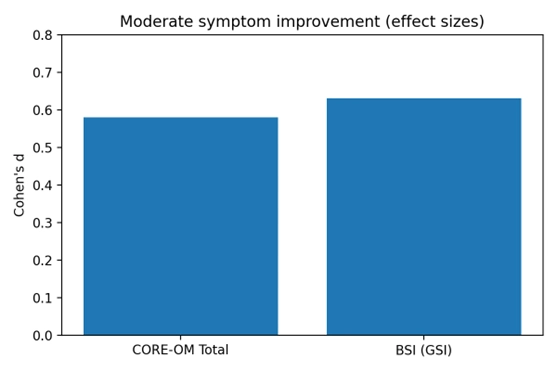
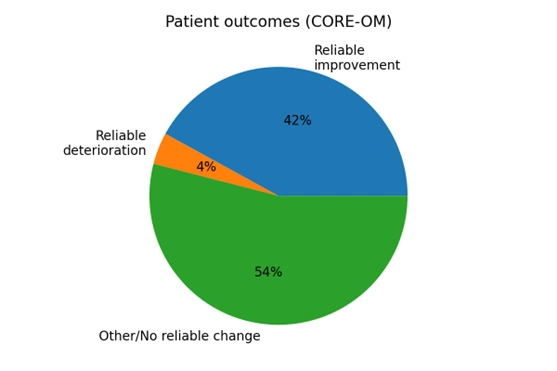
- Moderate symptom improvements on CORE-OM and BSI
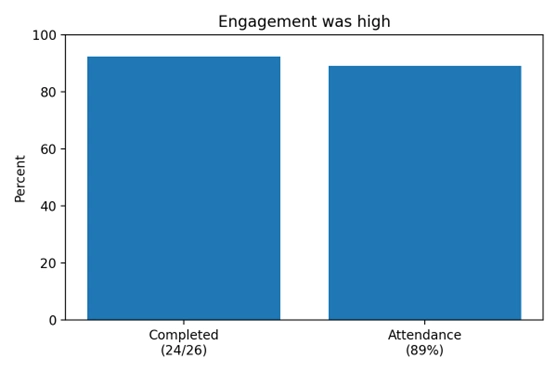
- 26 NHS patients with chronic/complex difficulties
- 24 completed treatment (super low dropout)
- 89% attendance among those who started
- No serious adverse events reported
What the numbers looked like:
Why this matters:
This study suggests ISTDP can be taught + delivered safely in real NHS services — even by early-career clinicians — as long as training and video-supervision are in place.
Therapy Enquiry
Please use the form below if you wish to contact us about arranging an appointment or would like to know more about our therapy. Your message will be handled with the utmost confidentiality.
Training Enquiry
Please use the form below if you wish to contact us regarding our Training and workshops or would like to know more about our training.
General Contact
Please use the form below if you wish to contact us or have any questions regarding any of our services.